
Richard Mitchell | Winter, 2026
Deli operators are targeting the restaurant customer for growth
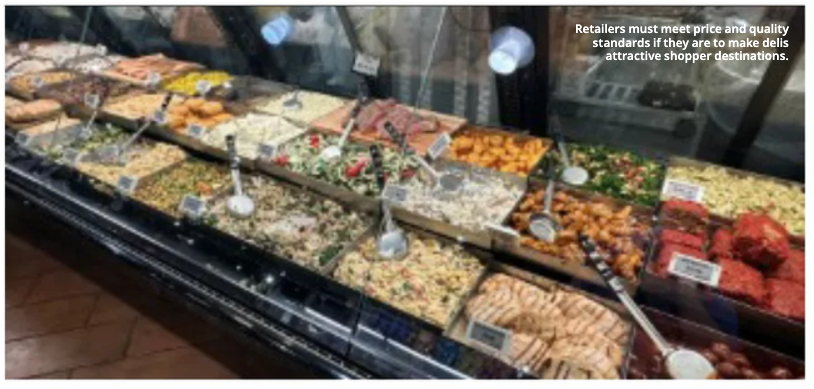
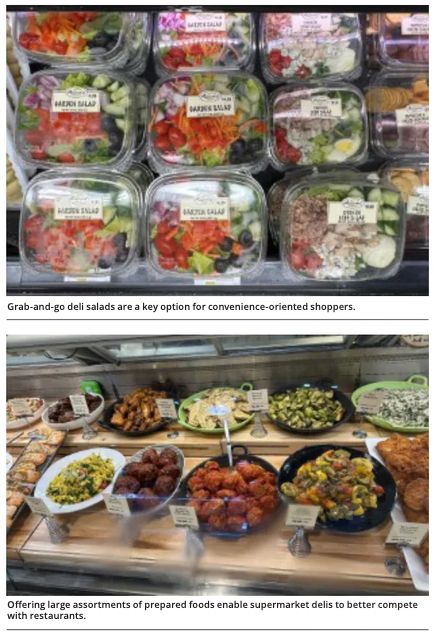
Supermarket delis are becoming more potent meal destinations. Greater numbers of shoppers are purchasing prepared deli selections as retailers expand assortments and position the items as affordable alternatives to eating out.
The share of consumers choosing deli prepared foods in place of restaurant meals rose from 12% in 2017 to 28% in 2025, states Arlington, Va.-based FMI—The Food Industry Association. Helping to drive the increase are the 53% of Americans who combine deli-prepared options with items from their own kitchen, said Andrew Brown, FMI senior manager, fresh foods.
“Shoppers believe hybrid meals help alleviate the burden of cooking from scratch and that deli-prepared foods offer an economic option, timesaving, flexibility and support for consumers’ health needs,” he said.
The deli department also is gaining strong traction as part of a broader fresh perimeter resurgence in grocery, said Jake Del Valle, vice president of food insights for NielsenIQ, a New York-based consumer intelligence firm. Spurring activity is increasing shopper interest in options that deliver convenience and quality, “which are strengths the deli department is uniquely positioned to offer,” he said.
Delis benefit too from the substantial amounts of consumers who cite quality of product (66%) and ingredients (56%) as top sales drivers, NielsenIQ research found. “The deli delivers on both fronts,” Del Valle said. “Customers can see what they are getting, and often with products that are prepared fresh in-store.”
In addition, larger amounts of younger consumers are gravitating to the fresh perimeter departments of supermarkets, he said, noting that many millennials (persons born between 1981 and 1996) and Gen Z shoppers (persons born between 1997 and 2012) care about transparency, clean ingredients and protein, “which are all strengths of the deli department.”
Prepared deli categories registering strong unit sales growth over the last year were salads (up about 6.6%), prepared meats (about 5.7%) and appetizers (about 4.2%), Circana reports. Such increases are occurring despite an average deli price increase of about 2.5% for prepared foods and meals over the last year, Circana states.
SERVE THE SHOPPER
Offering attractive products is vital for sustaining growth as shoppers are increasingly discerning, Del Valle said, noting that NielsenIQ research found that only 37% of consumers cite brand reputation as a trust driver and 72% would switch brands if they lost trust in their current brand. “The deli can’t just rely on its name anymore,” he said. “It has to prove itself every time a customer stops by.”
Operators can strengthen customer interest by “telling the story behind the products,” including the origin of items; how staffers prepare selections; and the elements that make selections special, Del Valle said. “That visible freshness and personal service is a competitive advantage in an increasingly digital grocery world,” he said.
Astute retailers also are fine-tuning their deli mix in accordance with local preferences and day part demand, Del Valle said.“Focus on items that drive traffic, whether that is a signature sandwich, premium charcuterie or family meal solution, and make sure those items are consistently excellent,” he said.
Offering signature foodservice selections can help operators make their delis top of mind for consumers, Brown agreed, noting that about 40% of shoppers indicate that their grocery outlet already has a signature offering, up from 33% in 2024.
“Merchandising a signature item can be counterintuitive to retailers, but removing decision fatigue is very helpful to consumers who are strapped for time and looking fora quick meal,” he said. “It helps bring focus to the department and enables retailers to meet such important factors as taste and quality.” Sampling can be a powerful sales driver as well, Del Valle said, noting that it “dramatically increases conversion when shoppers can taste the quality, especially with premium items.”
Retailers will ignite additional activity by getting shoppers to perceive the deli as a solution center and not just a fresh department, he said. “Position offerings to solve specific needs, such as quick weeknight dinners, entertaining solutions, healthy lunches and protein options for health-conscious shoppers,” Del Valle said. “The deli that wins makes the customer’s life easier while delivering on the quality they are seeking.”
Supermarket delis are already winning by “offering better quality and more interesting products that are approaching restaurant quality but at a far lower price than restaurants,” said Maeve Webster, president of Menu Matters, an Arlington, Vt.-based food industry consulting firm. “But delis will have major issues if they are not hitting the freshness and quality that is appropriate for the stores’ price points.”
ASSESS THE SITUATION
Merchandisers should analyze shopper behavior along with their competitors to determine the most appropriate selections to offer in each location, she said. That includes using loyalty card data to study buying patterns; interviewing associates to learn about common shopper inquiries; and researching the selections that other delis and restaurants are offering, Webster said.“Retailers are wasting incredibly important resources if they aren’t using available data to better position the deli and its products,” she said. “It is not about offering the same things as competitors but identifying what is popular while creating a more own-able and defensible position or product.”
Prepared delis also require a distinct operational approach as they are more like restaurants than other fresh departments, such as produce or meat, Brown said. “It can be a game-changer for food retailers when their mindset changes from stocking assortment and variety to catering to a dining experience,” he said.
In addition, strong deli foodservice programs must have the necessary staffing to support a freshly prepared initiative, Brown said, noting that it is a labor-intensive business and adding more items to produce, monitor and sell can be challenging but is essential to succeed. “Those that dedicate the resources will win in the long run,” he said.
Richard Mitchell | Winter, 2026